
Clothing Upcycling in Tallinn: Creative Restyling of Old Garments
We give favourite garments a new life: change the cut, refresh the silhouette, combine materials, add details and turn clothes you no longer wear into something unique for your style.
Work from 2 November · Replies in 3–5 days
We will agree the price and timing with you separately.
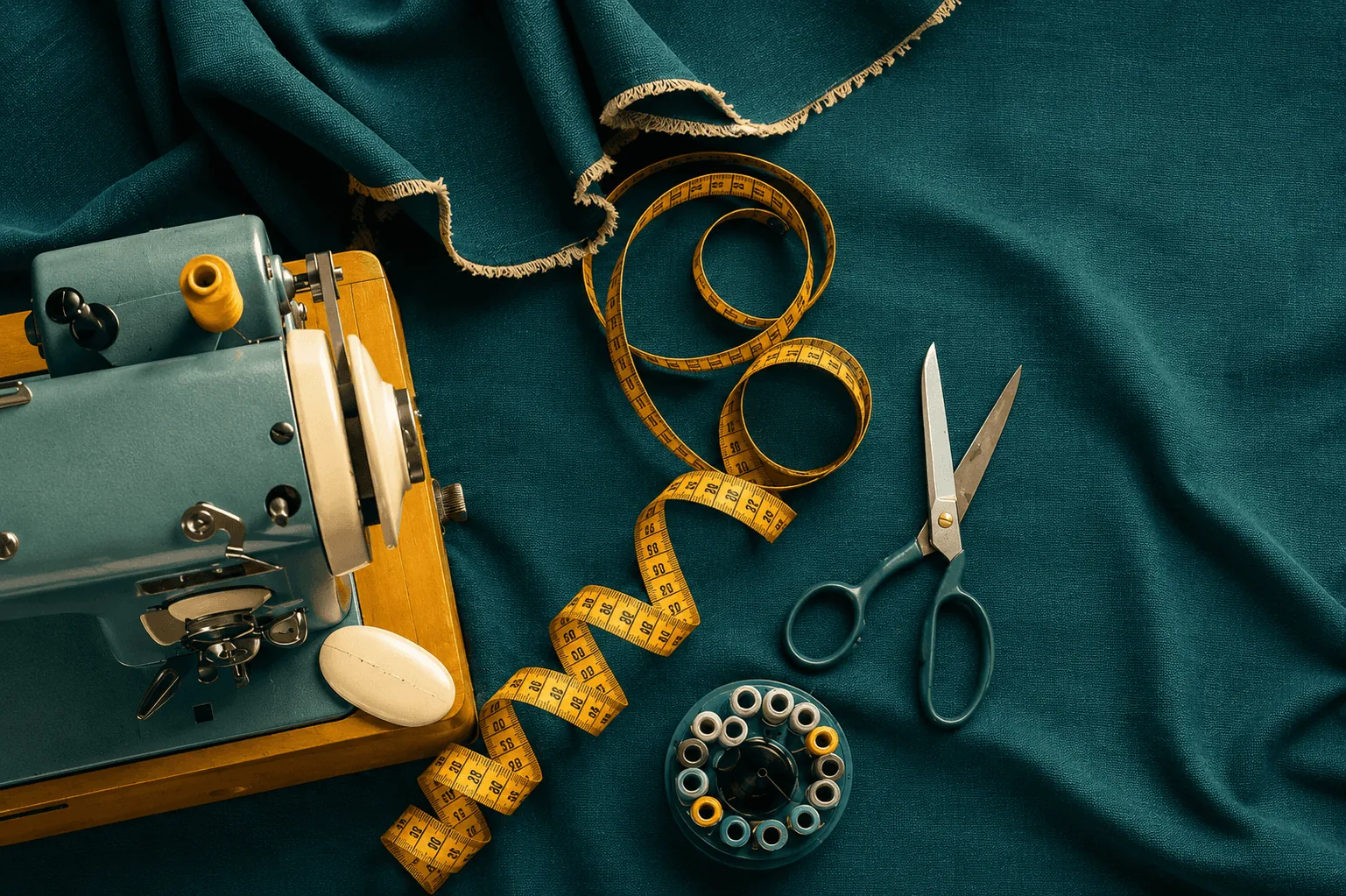
What clothing upcycling means
Clothing upcycling is creative restyling of an existing garment so it gains new value: a different silhouette, new purpose, more current look or individual details. Unlike recycling, the fabric is not turned into raw material - we work with the garment itself, its cut, quality and story.
It is a good option when you have a dress, shirt, jeans, blazer or vintage piece that you do not want to throw away, but no longer wear as it is. We help decide what can be kept, what should change and what result will look neat, comfortable and wearable.
If you only need fitting, hemming or taking in without changing the style, our clothing alterations service is usually better. If you want a new look from an old garment, that is upcycling. Clothing alterations and fitting →
Upcycling options
Which garments can be restyled
Every project starts with assessing the fabric, seams, available material and your idea. Sometimes one detail is enough; sometimes the garment can be fully reimagined.
Jeans and denim
We restyle jeans, denim jackets and heavy denim: length, silhouette, fit, inserts, decorative stitching or worn areas turned into part of the design.
Shirts
An old men’s or women’s shirt can be refit, shortened, have sleeves changed, contrast details added or become a more current everyday garment.
Dresses and skirts
We refresh dress or skirt length, neckline, sleeves, waist, silhouette or decorative details. Good for vintage dresses, quality fabric and sentimental garments.
Blazers and jackets
If fabric and construction allow, a blazer or jacket can be modernised through fit, length, sleeves, waistline or details.
Vintage garments
We handle vintage garments carefully: preserving the character, fabric and interesting details while making the piece comfortable for today.
Garments with stains, holes or damage
Sometimes a defect can become part of the design through an insert, decorative detail, stitch work or cut change.
Combining materials
Elements from two garments or added fabric can create a new silhouette, contrast detail or more interesting design.
Decorative details and hardware
We add or replace buttons, trim, inserts, ribbons or stitching. A small detail can make a garment loved again.
Examples
Inspiration: examples of creative restyling
Each piece started as something old or unloved. Show us your idea and we will discuss what can be done.
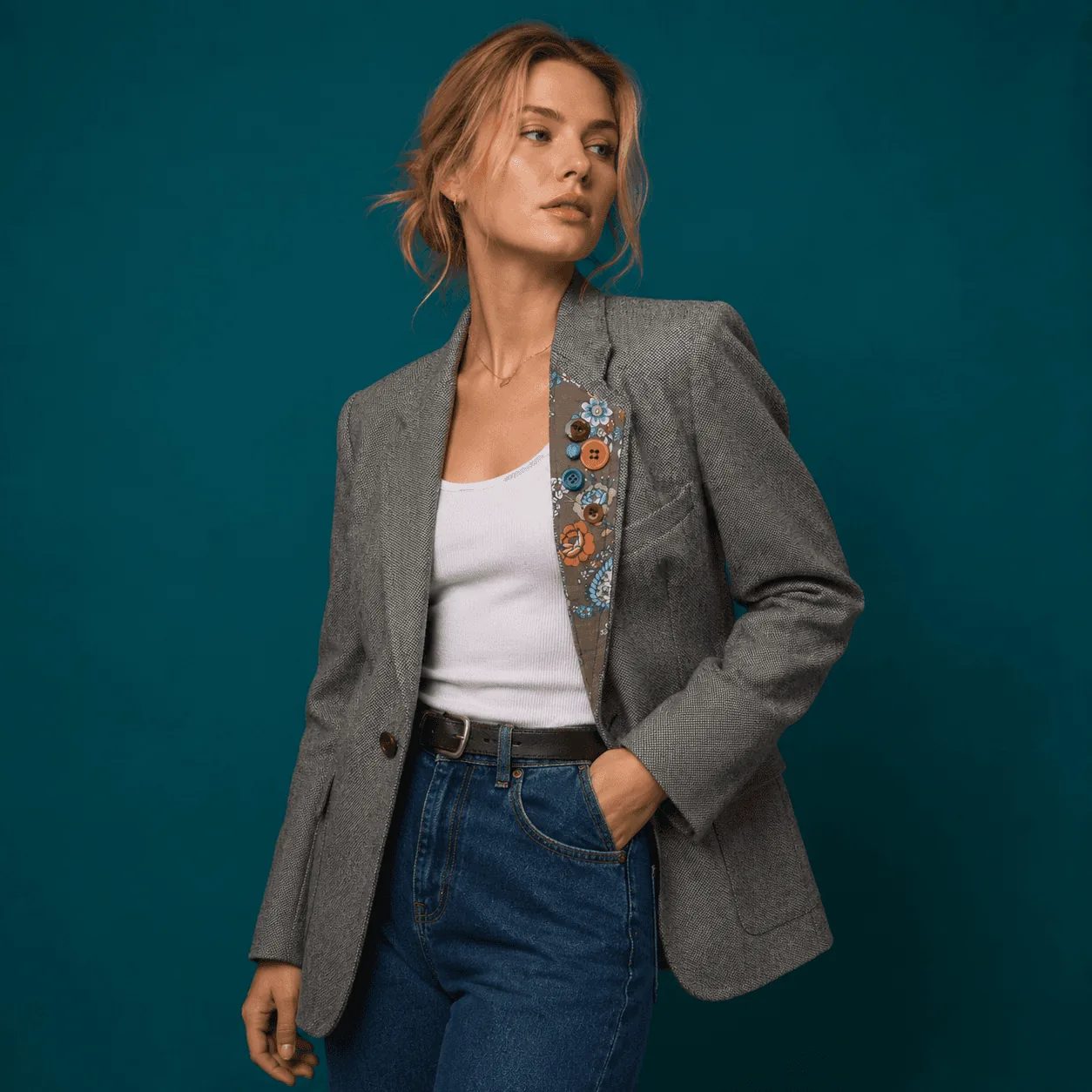
Embroidery on lapel
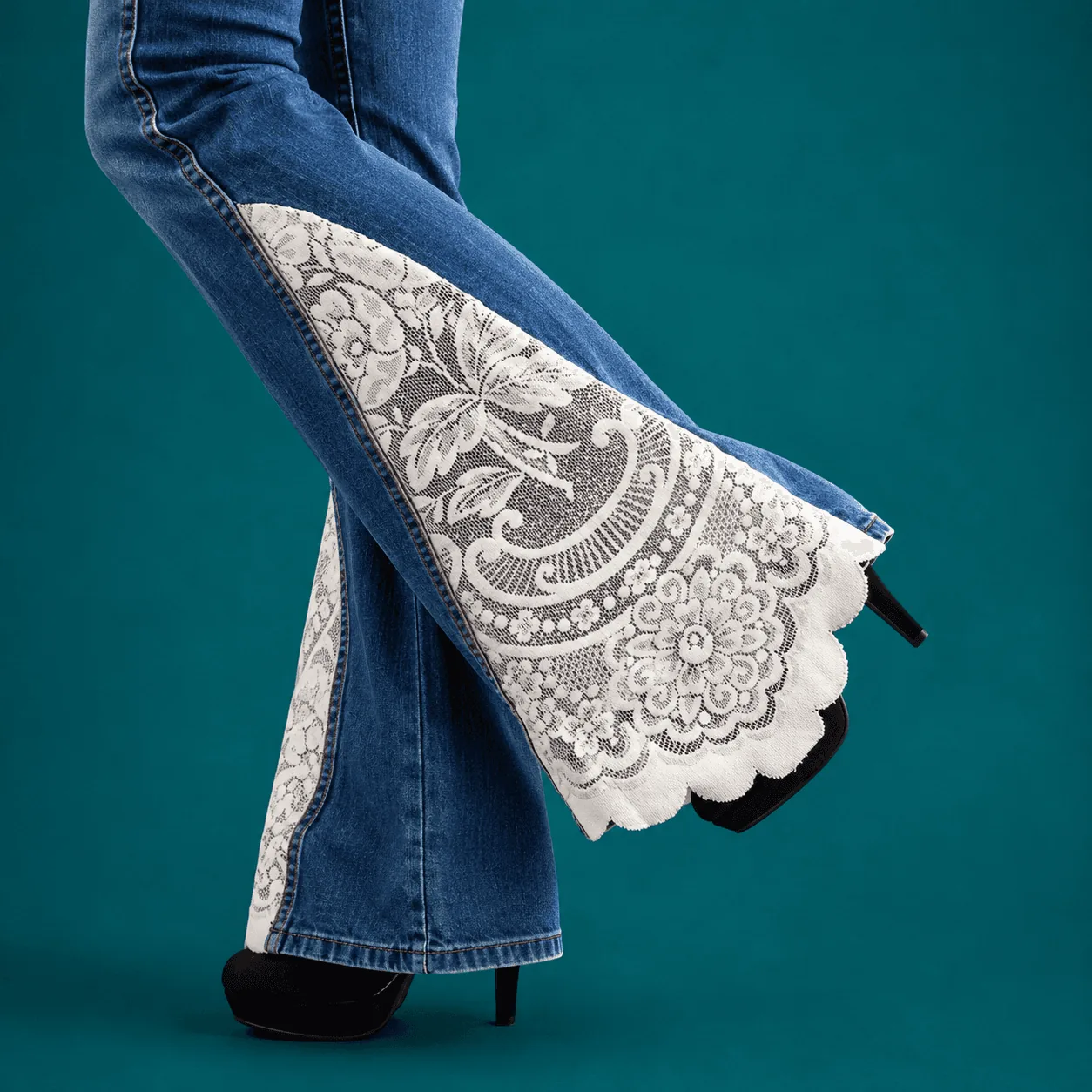
Lace instead of flare
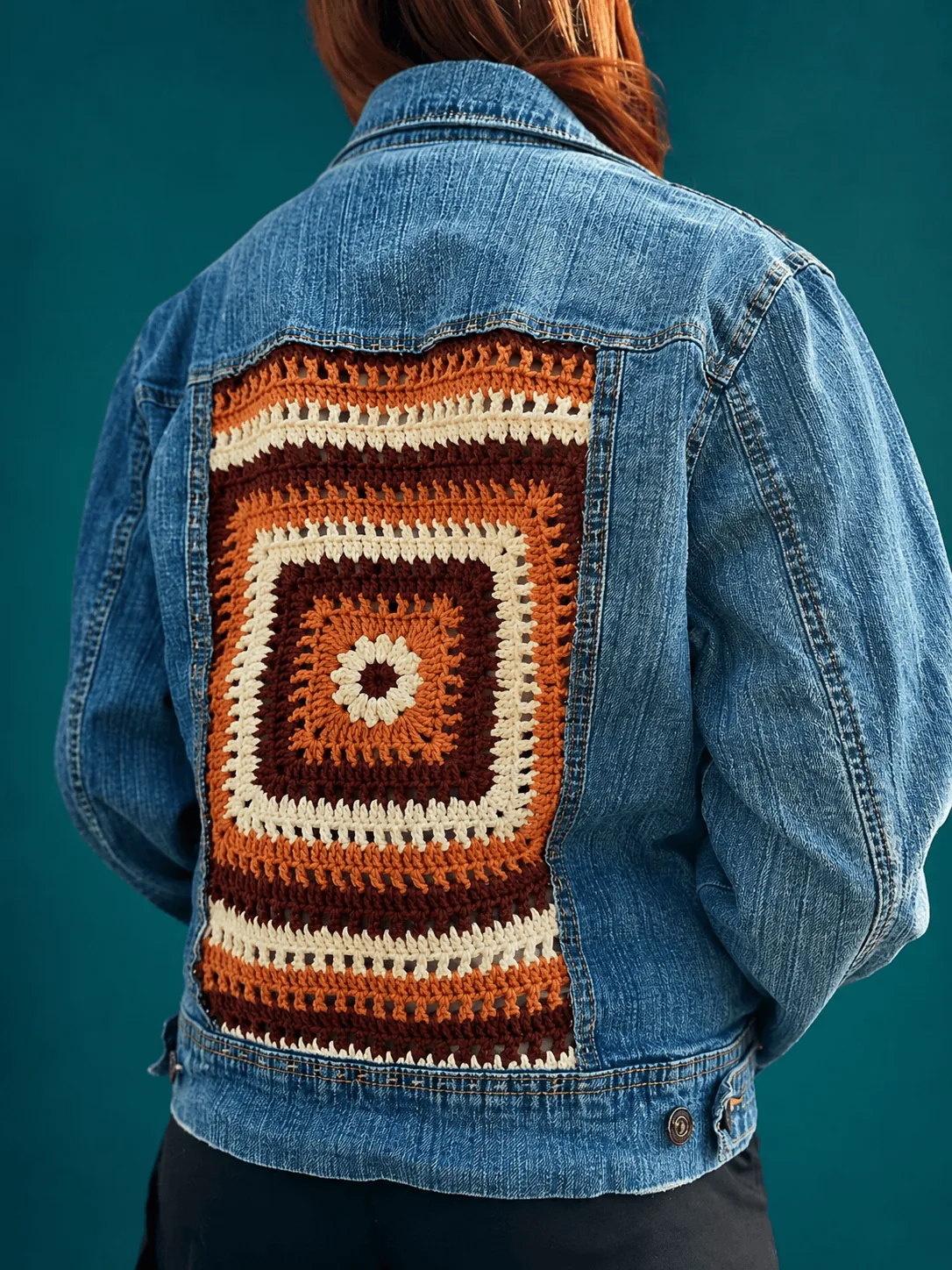
Knitted back panel
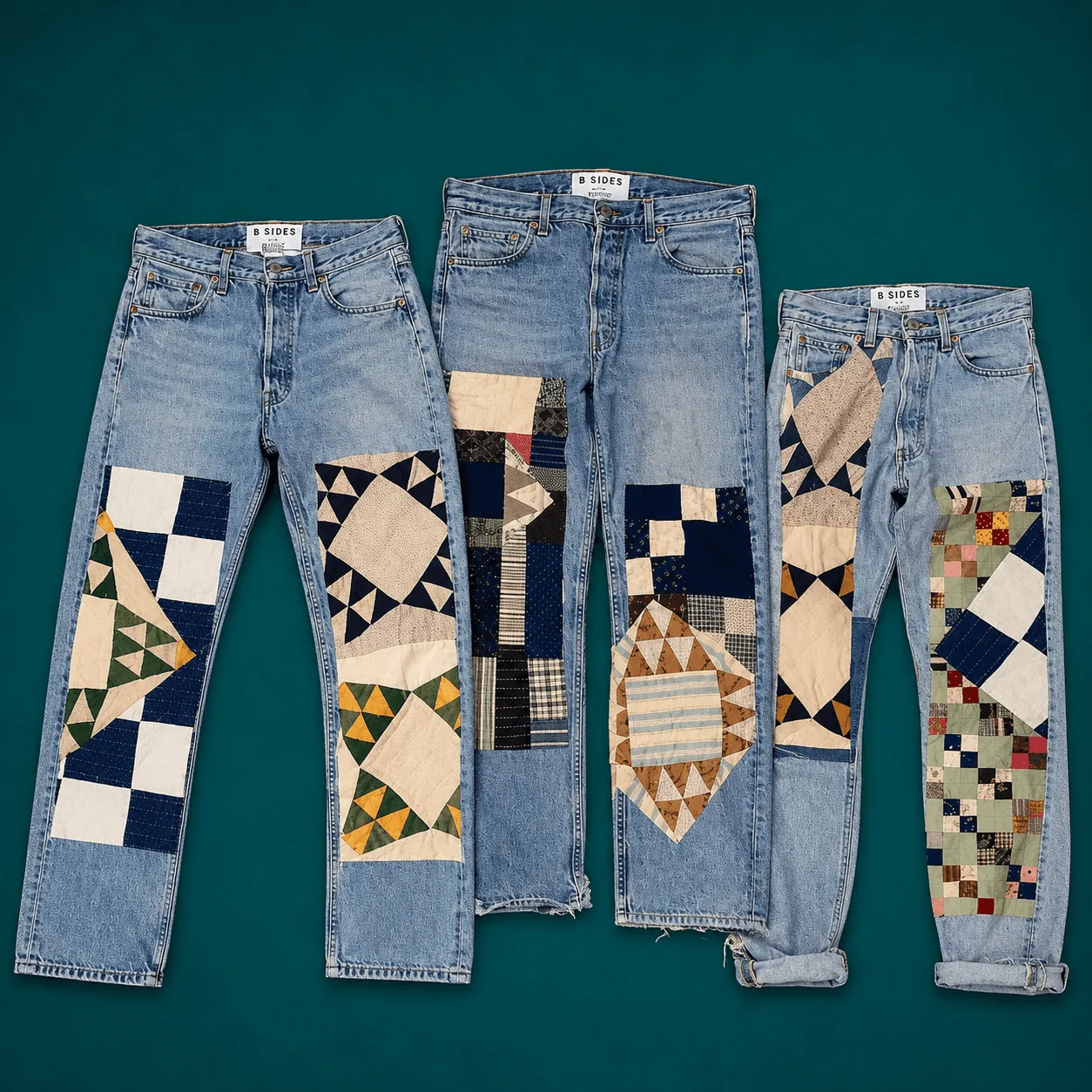
Patchwork inserts
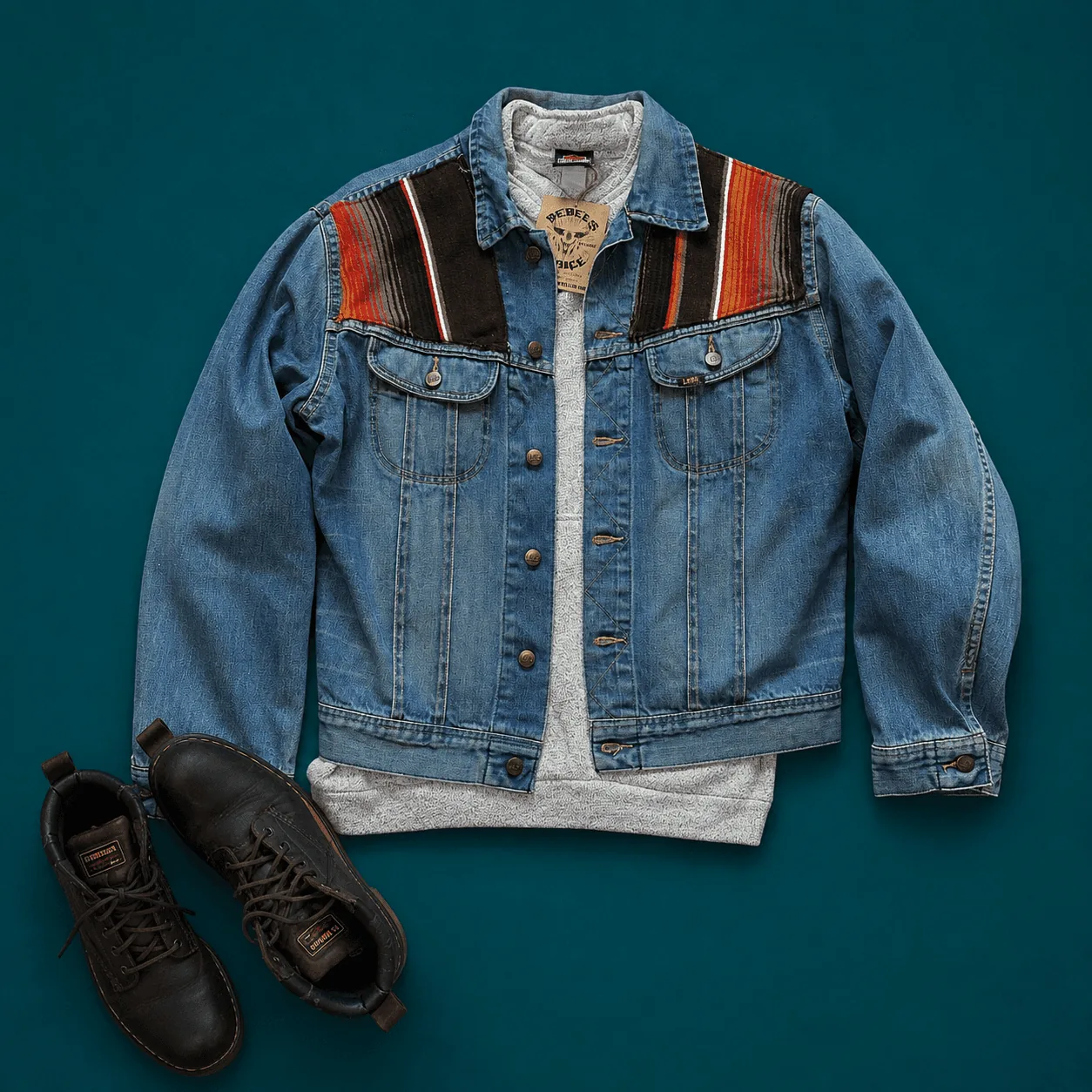
Ethnic inserts
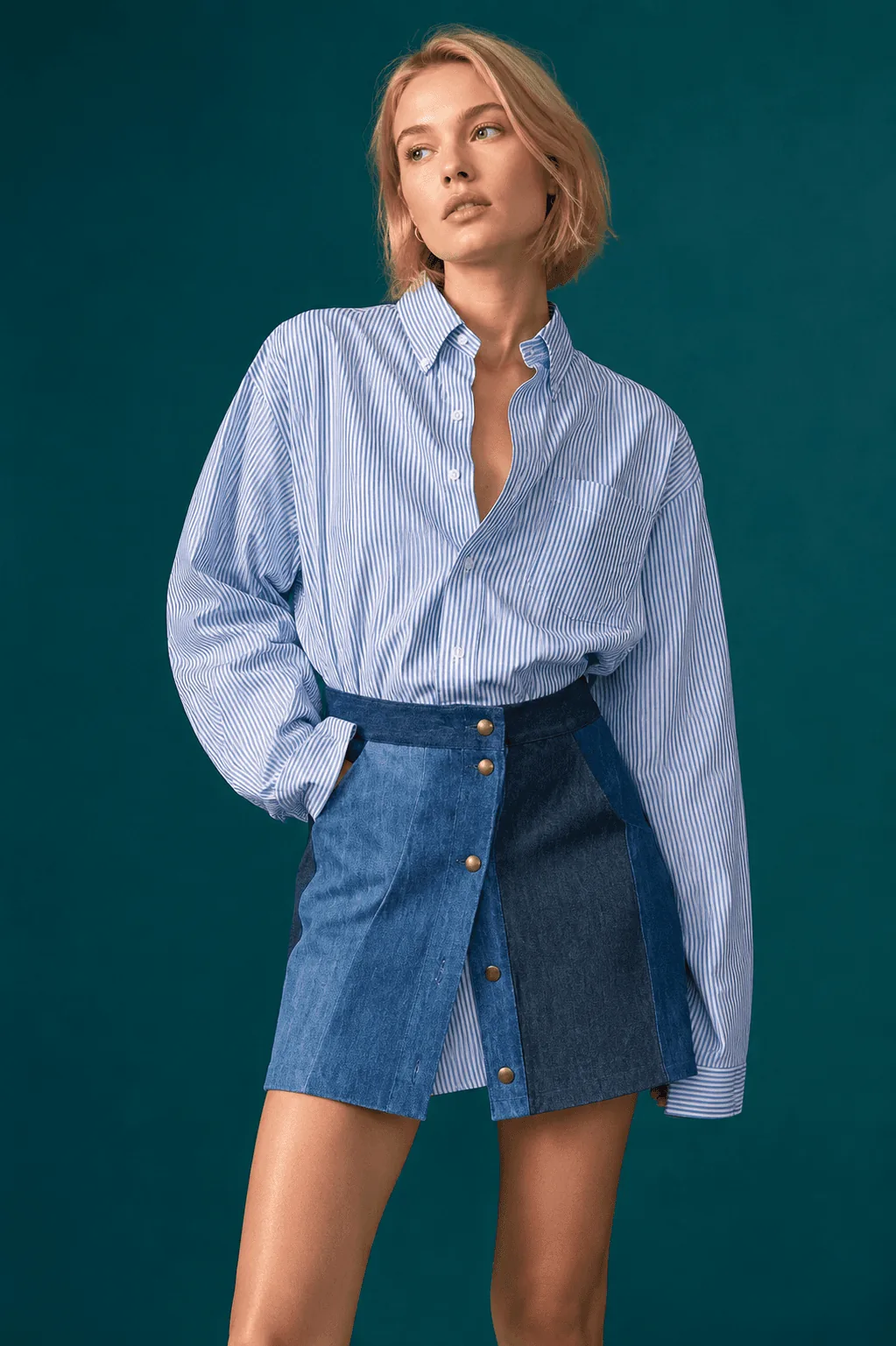
Two-tone denim
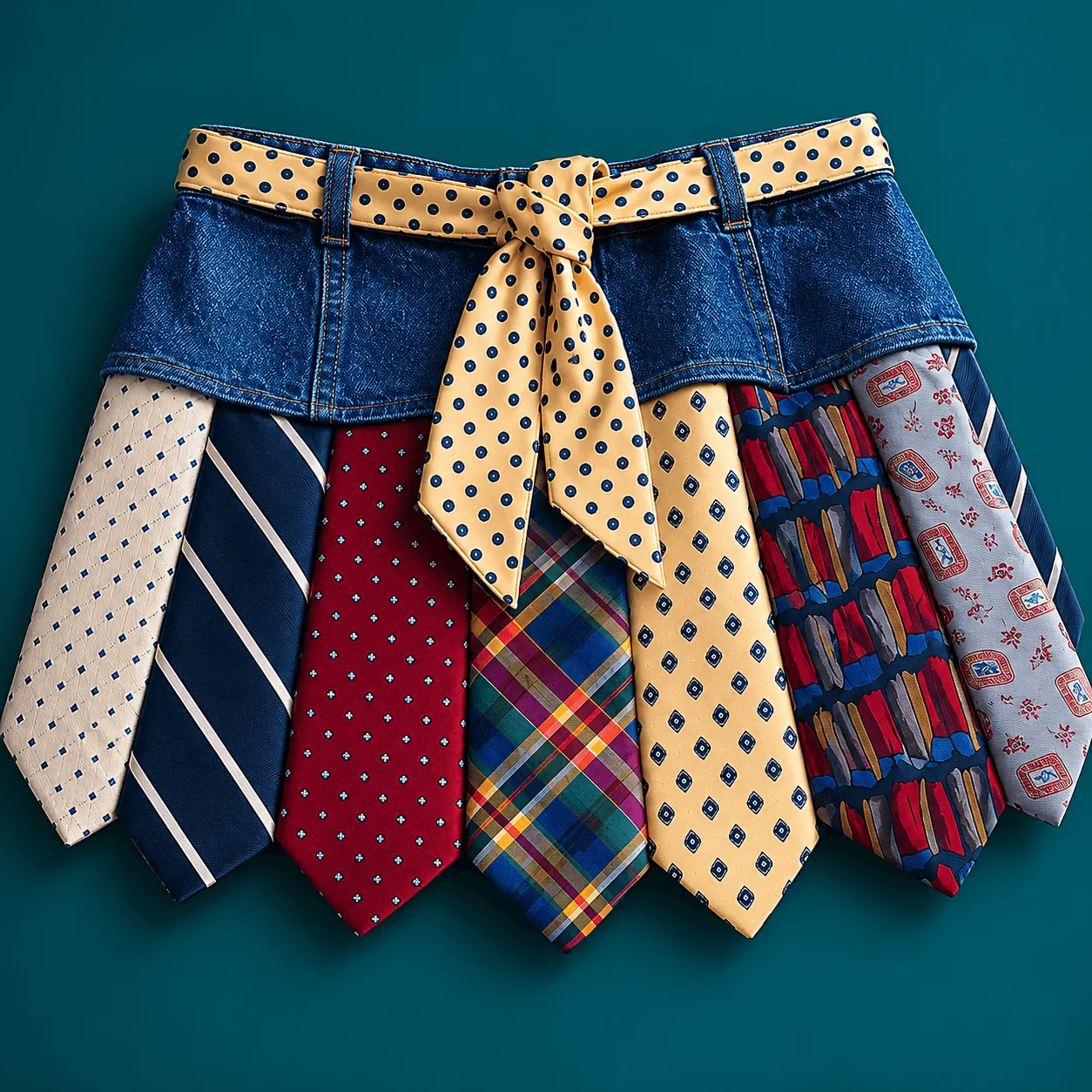
Ties as decoration
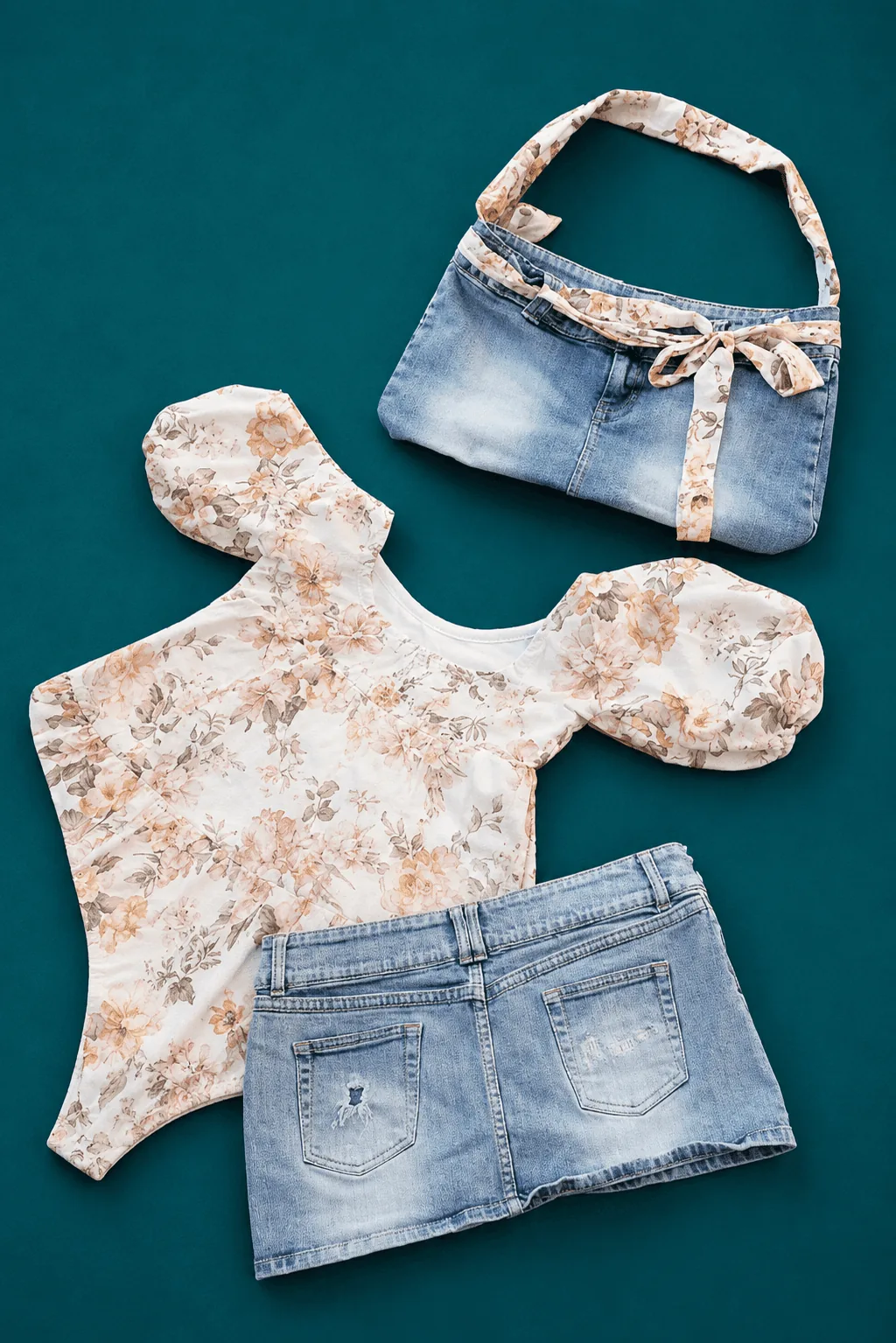
Bag from a denim skirt
Why restyle clothing
Upcycling combines practicality and self-expression. It is not just repair or disguise, but a way to look at a garment again: what should remain, what stops you wearing it and what design works for you.
- Uniqueness - you get a garment that cannot be bought in a shop.
- Personal style - the clothing changes for your look, not a mass trend.
- Preserving quality - good fabrics, vintage materials and strong denim often deserve a second life.
- Respect for garments - favourite clothing does not sit unused or go to waste.
- The story of the piece - memory, fabric or details can remain while the garment fits today.
- A conscious alternative to buying - sometimes updating what you have is better than searching for something new.
How creative restyling works
Send photos or video by WhatsApp or e-mail and briefly describe the idea: what you like, what does not work and what result you want.
We assess material, construction, wear and seam allowances, then honestly explain what options are possible.
At a fitting or through extra photos we refine fit, length, silhouette and details.
We agree the design, price and timing before starting. The price depends on complexity, handwork and materials.
We restyle the garment: change the cut, reinforce places, add details and keep the piece comfortable.
At the final fitting we check fit and appearance and make small corrections if needed.
Simple changes usually take 5-10 working days. Complex upcycling, combining materials or vintage work can take 2-4 weeks. Timing is always agreed in advance.
When upcycling fits and when another service is better
Upcycling fits if:
- the garment is good fabric but an outdated cut;
- the garment no longer suits your style but you like the material;
- a vintage piece needs a modern silhouette;
- a stain, hole or damage can become part of the design;
- you want an individual garment but not full custom sewing from scratch;
- the piece has personal or family value.
Choose clothing repair if:
- you only need a zipper replaced, seam repaired, button sewn on or lining restored;
- the damage should be fixed as discreetly as possible.
Choose alterations and fitting if:
- you only need shortening, taking in, letting out or fitting without changing the design.
Choose custom clothing if:
- you want a completely new garment from new fabric, built to your measurements.
Honest expectations:
- We do not promise a result without seeing the garment: every fabric and construction has limits.
- Very worn fabric may not survive complex restyling.
- Creative restyling is not always cheaper than buying new because it is individual work.
- Leather, fur, shoes and bags are not part of this service.
Frequently asked questions about clothing upcycling
What is clothing upcycling in simple words?
It is creative restyling of an old or outdated garment into something new, more valuable and wearable. We work with the garment itself: cut, silhouette, details and fit.
How is upcycling different from ordinary alterations?
Ordinary alterations solve a technical task: shorten, take in, hem or fit. Upcycling changes the idea of the piece: style, details, material combinations or turning a defect into design.
Can old jeans be restyled?
Yes. Jeans and denim work well for upcycling: length, fit, silhouette, inserts, reinforcement and decorative stitching are all possible depending on condition.
Can an old or vintage dress be updated?
Often yes. Length, sleeves, neckline, waist, silhouette or details can be changed. Vintage pieces are handled carefully to preserve their character.
How much does clothing upcycling cost?
The price depends on the idea, fabric, handwork, fittings and extra materials. Simple restyling can cost like an alteration, while complex creative work is estimated individually.
Do I need a fitting?
For most garments where fit matters, a fitting is recommended. For simple or loose pieces, photos, video and exact measurements may be enough.
Can I send photos or video first?
Yes. Send front, back and close-up photos plus examples of the style you like. That helps us judge whether upcycling is realistic.
Which garments are not suitable?
If fabric is very thin, falling apart or damaged over large areas, complex restyling may not be reliable. Leather, fur, shoes and bags are not part of this service.
Can you work from my sketch or reference photo?
You can send a sketch, reference photo or idea board. We do not copy another designer exactly, but can use the reference as direction.
Is upcycling cheaper than buying new?
Not always. Complex work can cost more than a mass-produced item, but it preserves good fabric, the garment’s story and gives a unique result.
Have a garment you want to wear again?
Write by WhatsApp or e-mail, attach photos and tell us what you want to change. We will say whether upcycling is possible and which option would be the cleanest.
Work from 2 November · Replies in 3–5 days
We will agree the price and timing with you separately.